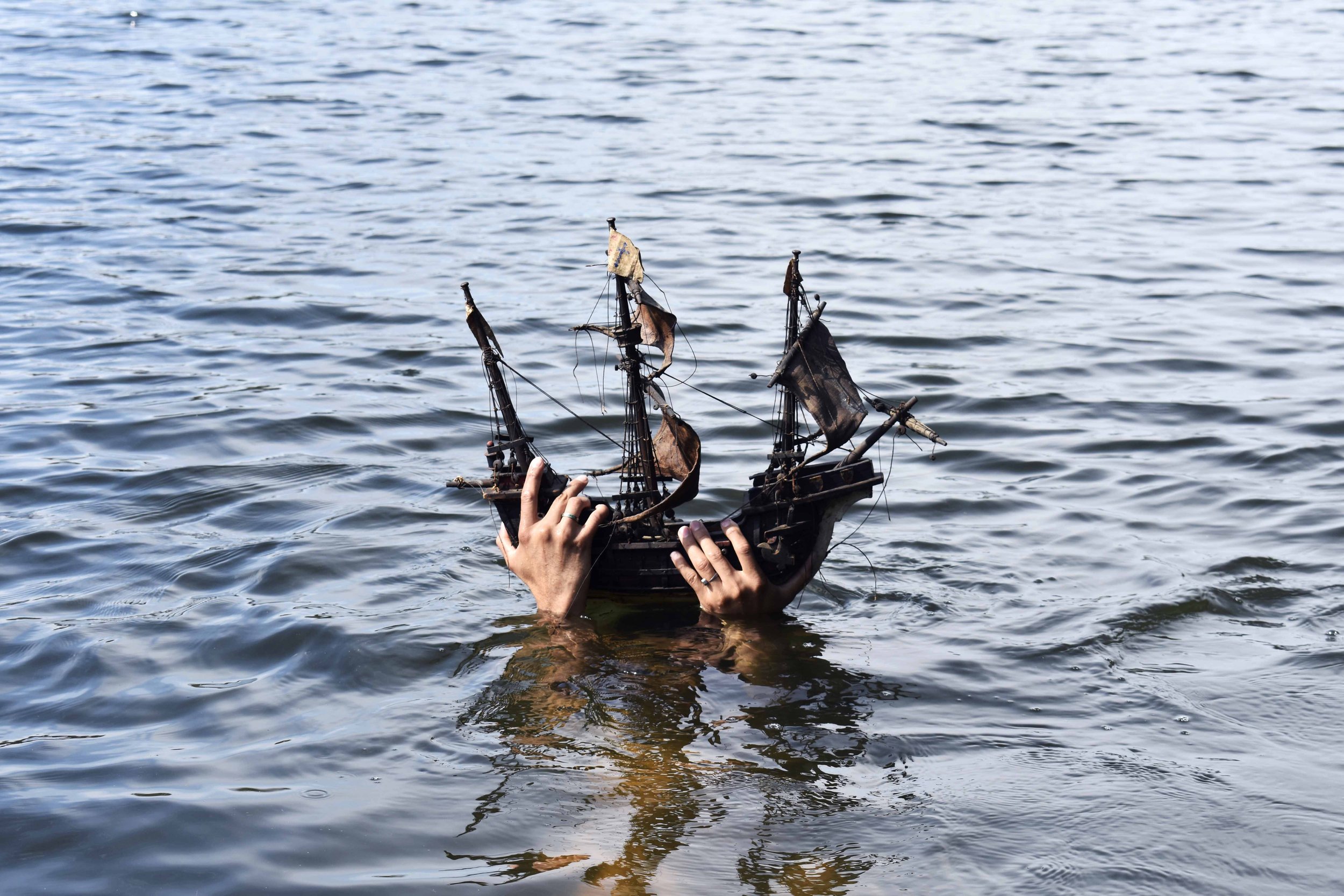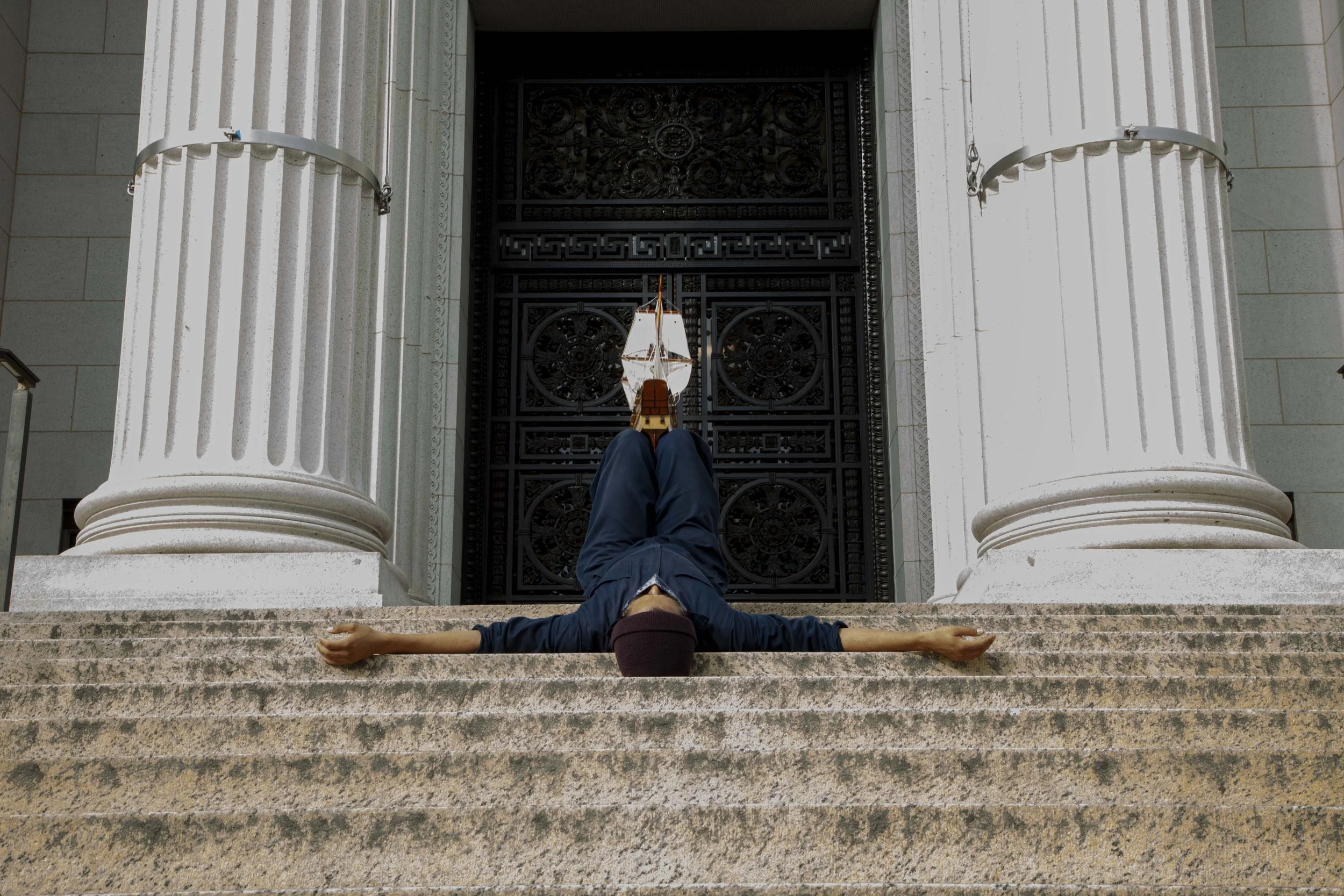

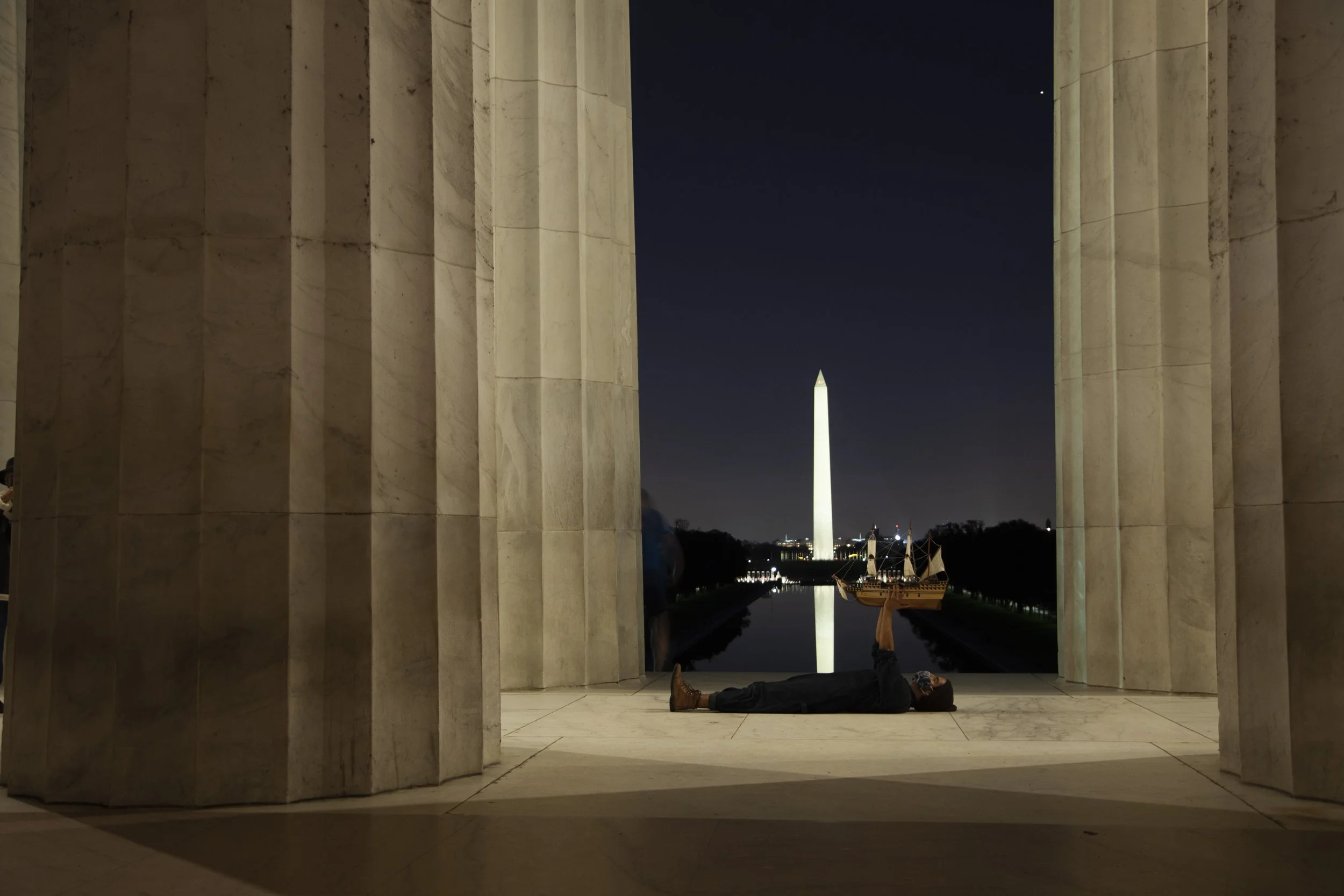
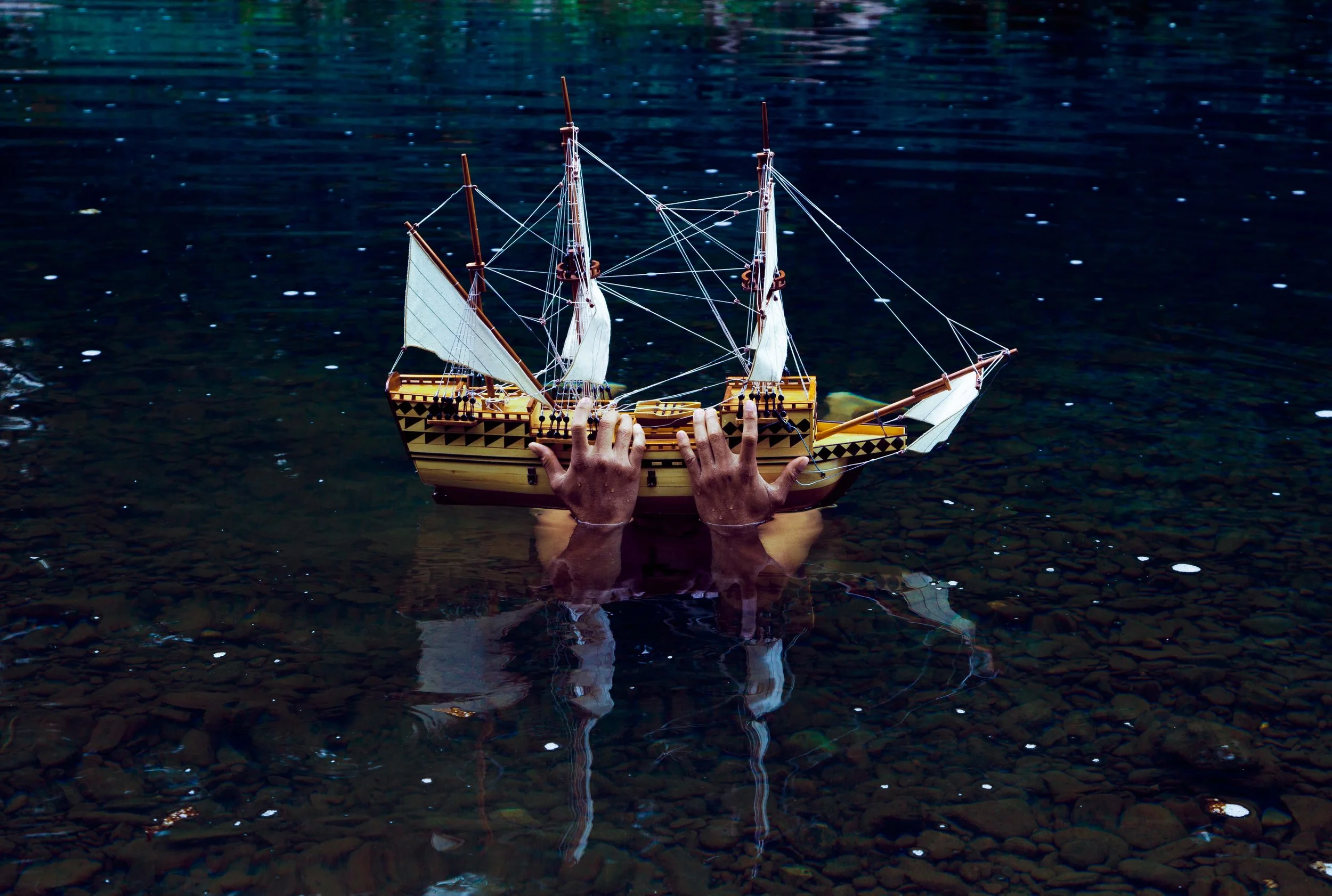
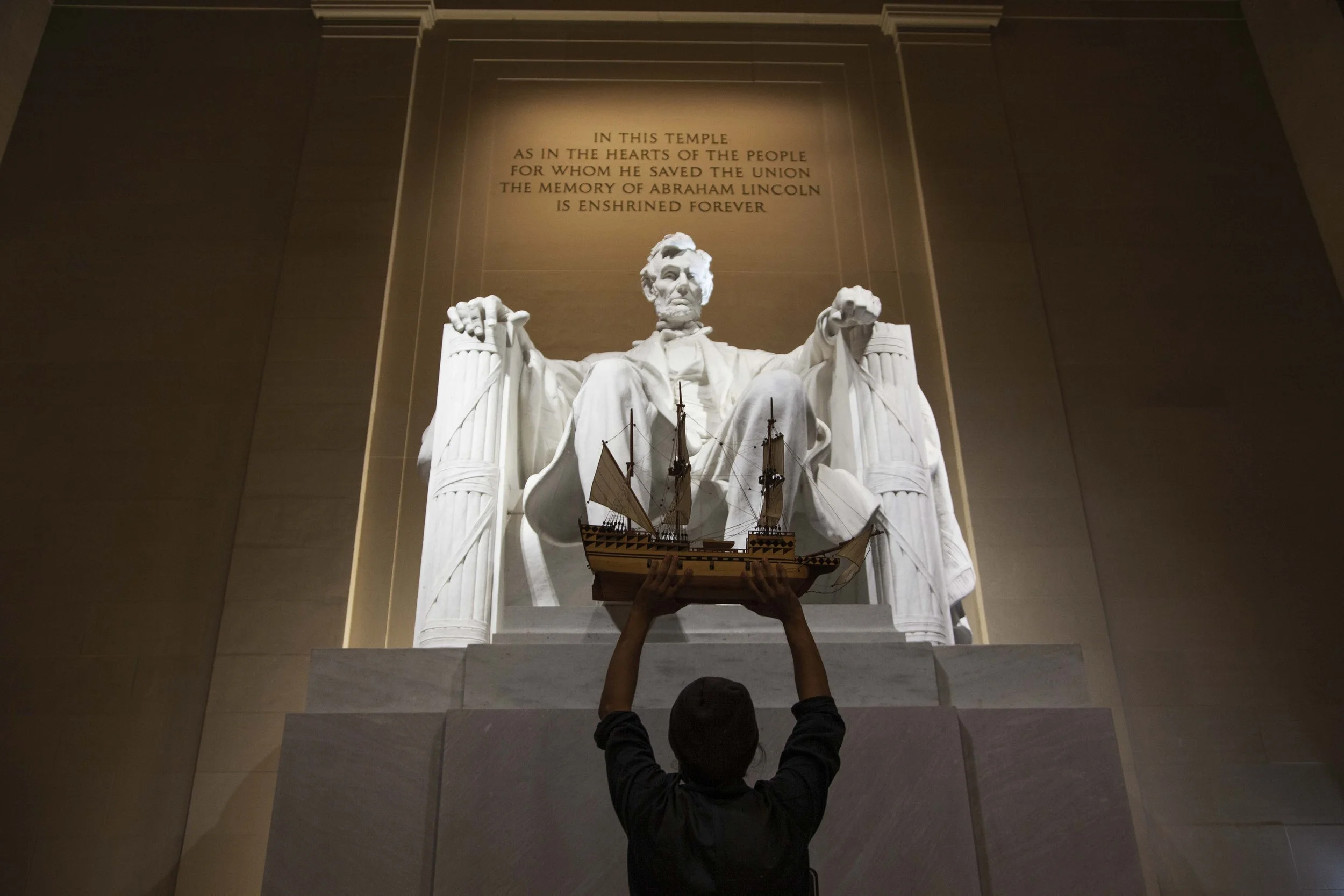
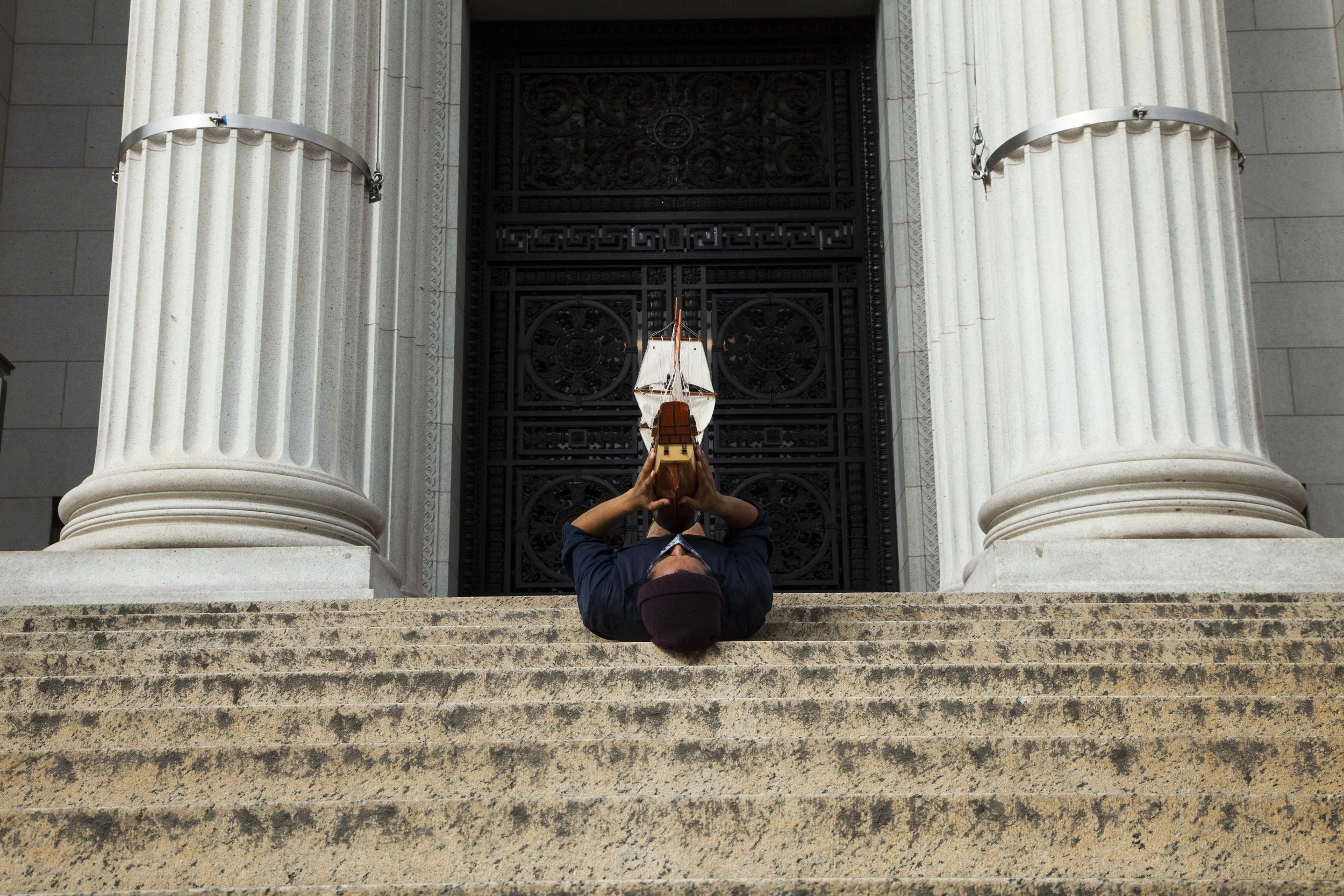
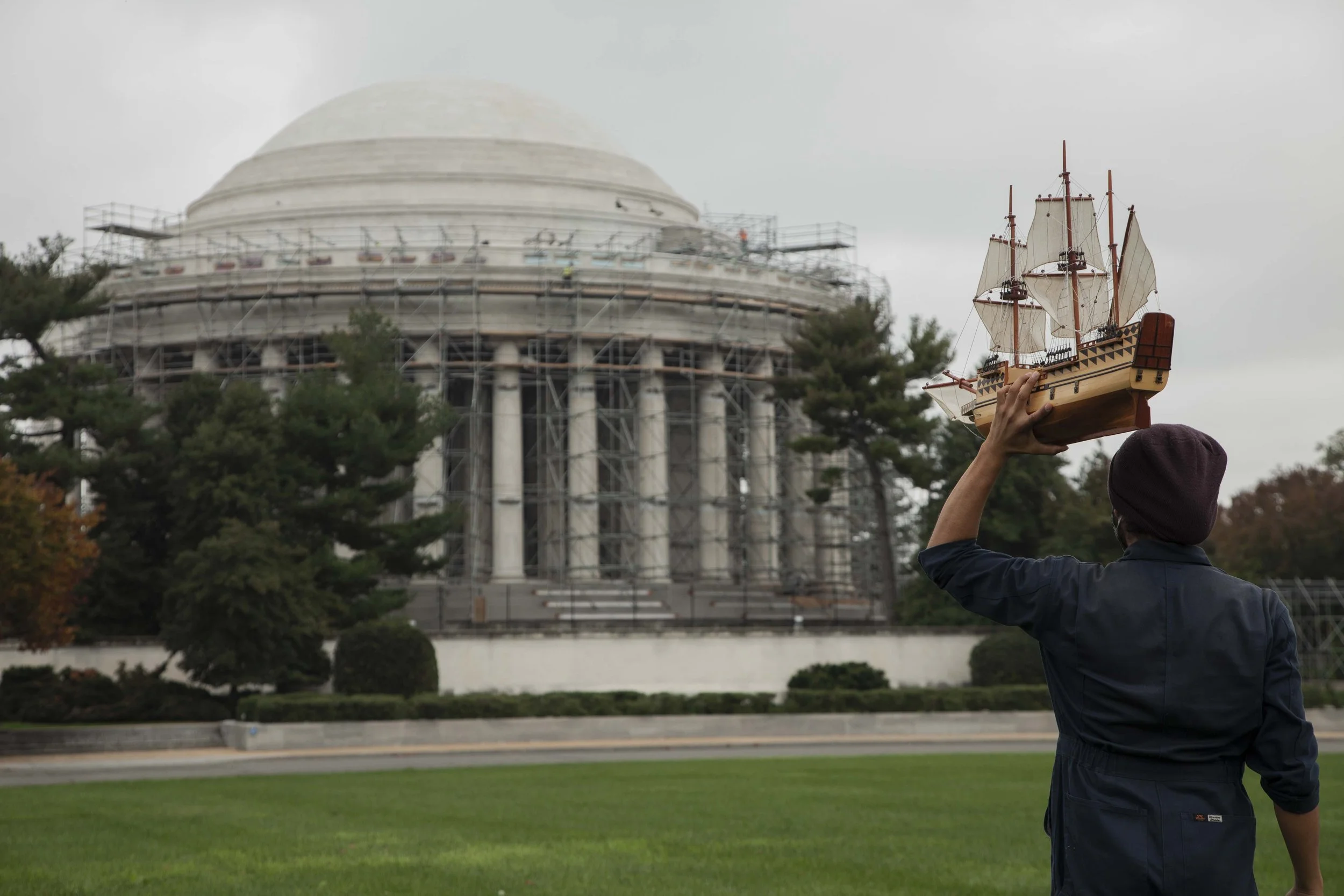
For GO BACK TO WHERE YOU CAME FROM (Mayflower), I built a replica of the iconic ship which brought the Pilgrims to the Americas. In 2020 right at the height of the pandemic and the US elections, I repeated the gesture of carrying a boat in my head for the duration of their journey at sea, this time it was the Mayflower, from September 7th to November 11. Originally I wanted to travel all across the 13 colonies, the places where the foundational myths of this country served as the structure for the master’s plantation.
A few days before the 400 anniversary of the landing of the pilgrims, I was able to visit the Plymouth plantation, and work with the pilgrim re-enactors. They contend how reenacting is the most effective way of retelling history, some of them have done it for over 30 years. While they hold the replica of the boat, they retell their memory of the journey in the boat back in 1620, part fact and fiction, reenactors respond based on the presumably objective study of history, even respond in an accent of the time. Some are more invested than others, everyone takes their job very seriously, as if the thread of history is being held between their hands.
Some of them claim their direct ancestors were in the ship, unbroken lineages of settler-colonial history. I think about my work as de-enacting, a practice of taking the tools and turning them against the master narratives, to challenge their validity and role in the formation of historical memory.