

Instructions for Becoming (2017-ongoing)
In the photographic and video series Instructions for Becoming, I instrumentalize my body in acts of propositional kinship with elements of the natural world—trees, rocks, mountains, waterfalls, roots, and cacti—through gestures that performance studies scholar Rebecca Schneider has described as “queer lamentations.” The series considers these encounters as forms of return. I think of trees and other elements of the landscape not simply as surroundings, but as witnesses and beings themselves, interconnected through intricate root systems, waterways, and ecosystems. The series began with trees, which I have been obsessed with since I was a little boy and a Boy Scout for 15 years. In this sense, the work is not only about returning to my roots as a migrant, metaphorically and geographically, but also about returning to childhood and to an early intimacy with the non-human world.
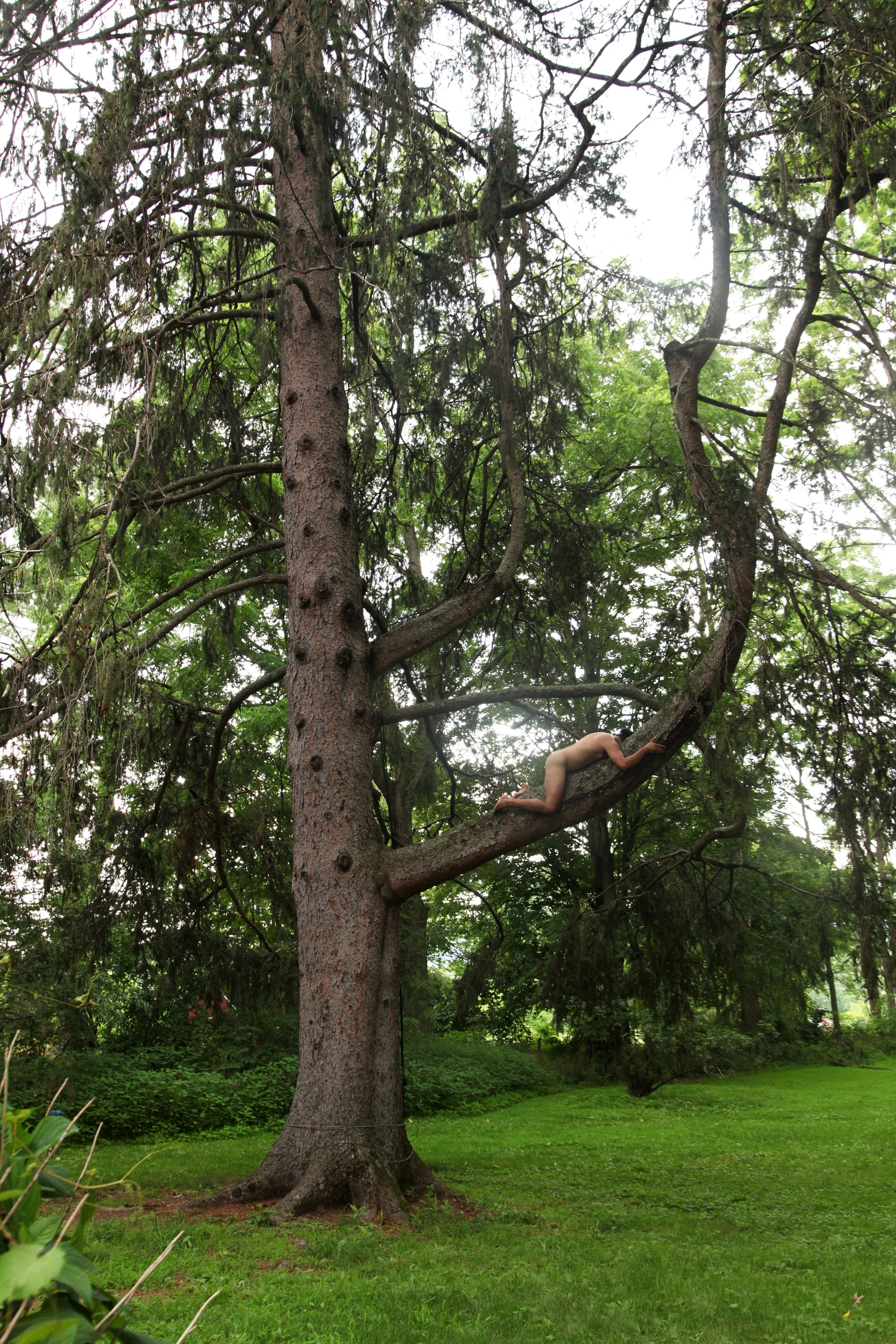
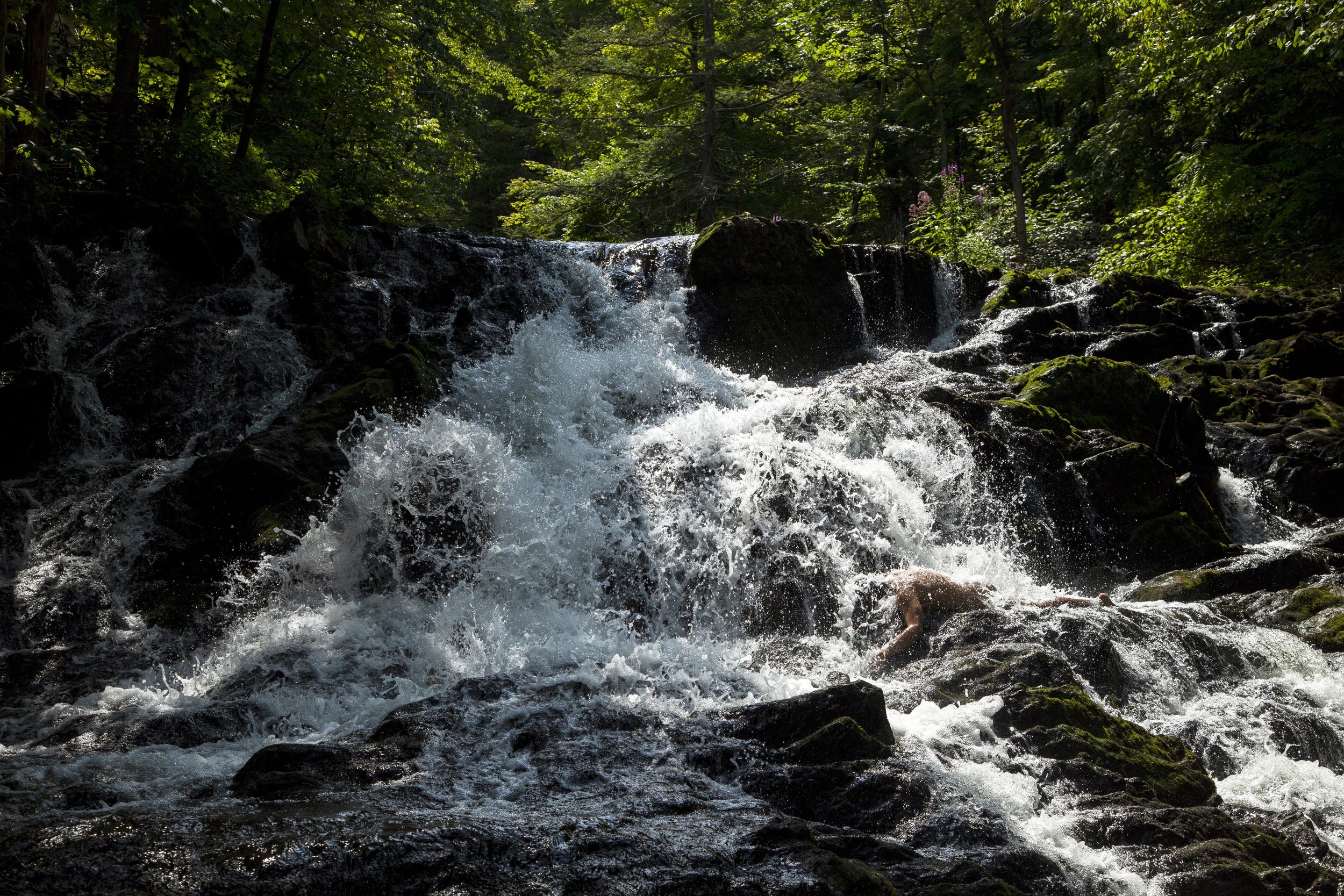
In one photograph, I stretch my body across a Bursera simaruba, commonly known as Indio Desnudo [naked Indian], a tree that sheds its bark as part of its continual regeneration and defense. In another, I lie across a Taxodium mucronatum, commonly known as ahuehuete or Montezuma cypress, beside a pool of water. Through these intimate portraits, I trace, mourn, draw strength from, and pay homage to forms of non-human kinship and precolonial inheritance. With both trees, I remain lying upon them for six to eight hours at a time.The series continues in an accompanying video filmed at a waterfall in the Hudson Valley, on the ancestral homelands of the Munsee and Muhheaconneok peoples. Over eight hours, I position my body along the riverbed in different poses, attempting to join the stream—its movement, force, and simultaneous ablution—while trying to breathe within the waterfall.
Elsewhere in the series, I embrace a saguaro in the Arizona desert and lie upon a mountain until I lose consciousness of the boundaries of my own body in 115 degree weather. These durational acts attempt to encounter nature as a distant relative: something from which we have become estranged, but to which we remain intimately connected. They propose an alternative journey of becoming and healing—one that asks the human body to become still enough to encounter other forms of life and other scales of time, becoming temporarily subject to another rhythm: that of water, stone, gravity, and geological time. What does it mean to become one with nature? How might we decenter the anthropocentric structures through which we understand ourselves and the world around us? What happens when the body becomes still enough to inhabit the time of the earth?